
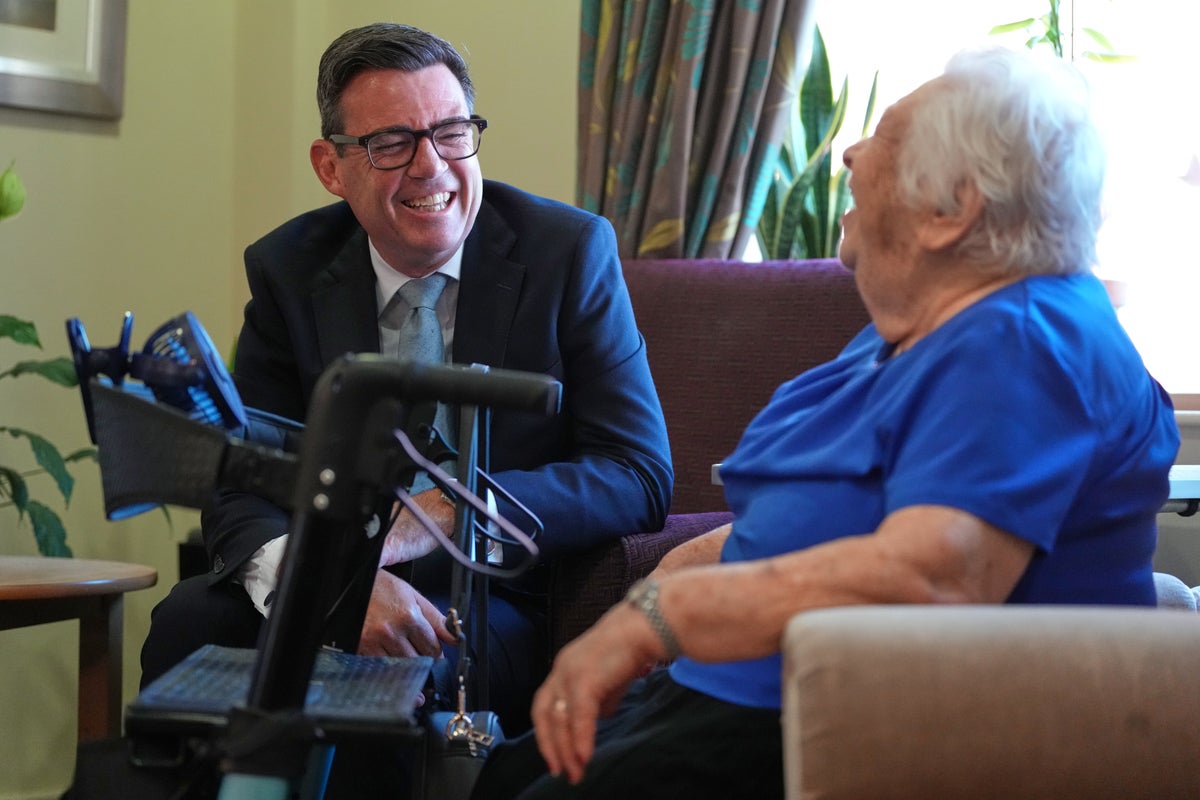
British Prime Minister Andy Burnham pledged Wednesday that he will succeed where decades of predecessors have failed and fix a “broken” social care system built on an overstretched public sector and profit-making private firms.
Burnham, 56, said it was a “major dereliction of duty” that his generation of politicians had failed to provide decent care in a way that is affordable for both individuals and the state.
“I think social care in England is as unfair as American healthcare,” Burnham said. “The vulnerable pay with everything.”
The Labour Party leader said he would try to work with other political parties to create a “national care service” to sit alongside the taxpayer-funded National Health Service established after World War II to give free healthcare to all.
Burnham, who became prime minister last week, says it’s his priority to tackle the patchy access to social care for those who need it because of age, illness or disability. It’s a pressing issue in a country with an aging population and a frayed public health system, and one that has haunted previous Labour and Conservative governments.
“You’ve probably got a feeling of déjà vu,” Burnham told the audience in a speech at a London care home. “Don’t have that. This time we’re going to do it.”
“It’s a major dereliction of public duty that Parliament has not faced up to this, of all challenges,” Burnham added, claiming that “politicians have put point-scoring before fixing this issue.”
Burnham included himself among the failures, having proposed social care reform in 2009 when he was health secretary under former Labour Prime Minister Gordon Brown.
Now he has returned to government after a decade away as mayor of Greater Manchester. And, with his father living with Alzheimer’s, Burnham said the issue is personal.
“I’m making this a test of myself,” he said. “I would never forgive myself if I left without having tried.”
Burnham said Louise Casey, a social welfare expert who has led public numerous reviews and inquiries, would helm a “Big Conversation” to hear from the public on care.
Casey said it would strive to be a “game changer that tries to renegotiate the social contract with the public.”
The prime minister also invited opposition leaders to a meeting about the issue, saying change will come only if rival politicians find common ground.
The main opposition Conservative Party said its health spokesperson would attend the talks, and centrist Liberal Democrat leader Ed Davey said he would go. Anti-immigration party Reform UK, which leads many opinion polls but has just seven seats in the 650-seat House of Commons, said it was not invited.
Burnham said he was prepared to risk unpopularity to make changes, which could mean tax increases.
He said he would work to increase pay, training and status for care workers who do vital work for “poverty pay.” The government also will look at how much people must pay before they can receive state-funded care, and at the role of private companies who own the bulk of care homes.
